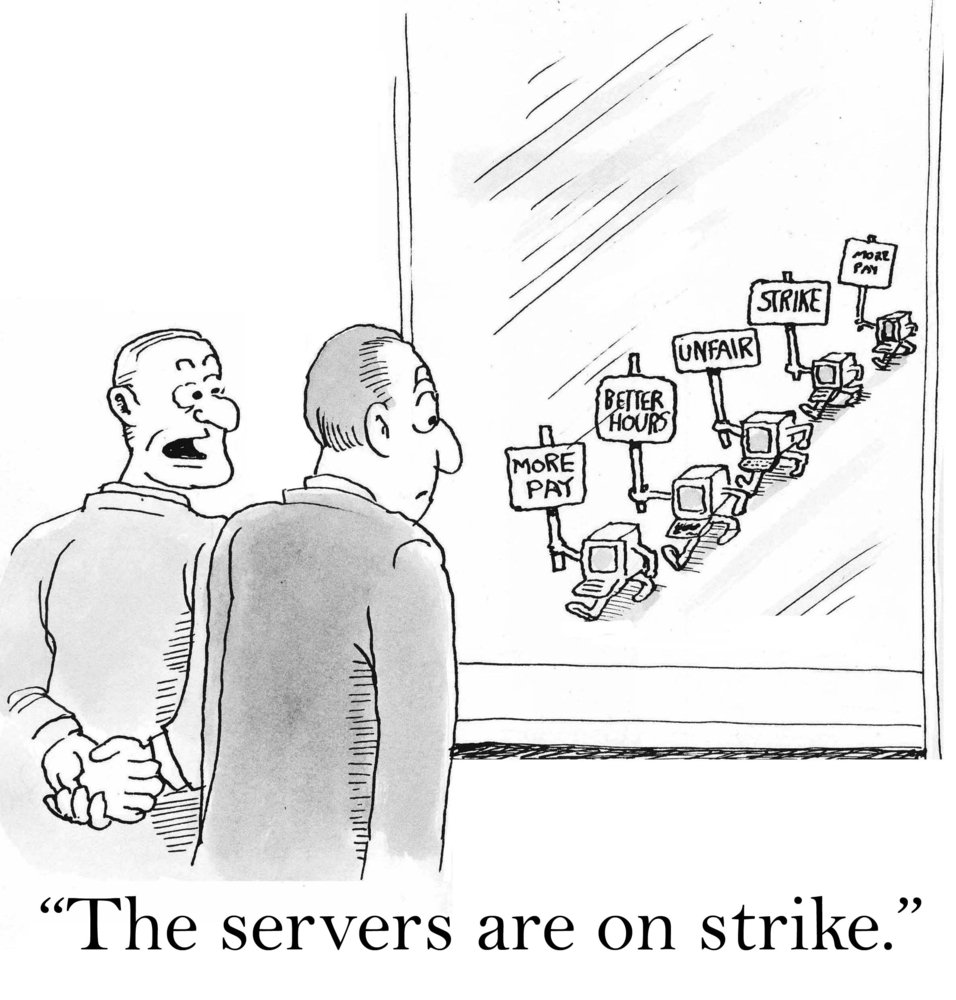
Find out why organizations might have a hard time realizing energy savings and energy efficiency as they weigh wired vs. wireless network connectivity. Read the full article at: http://www.techtarget.com

Find out why organizations might have a hard time realizing energy savings and energy efficiency as they weigh wired vs. wireless network connectivity. Read the full article at: http://www.techtarget.com

Twenty years ago, first-generation wireless wasn’t considered a necessity. But the technology has evolved to a point where a robust wireless network is mandatory in many building locations, and it’s as crucial to a healthy enterprise as computers and smartphones. Organizations in a variety of sectors have seen a dramatic increase in the network speeds required to operate effectively. These organizations include office environments, manufacturing facilities, schools and campuses, and hospitals.

Many significant, life-improving and life-changing advancements in patient care and medical research are supported and enhanced by wireless technologies. Wireless systems are pervasive in healthcare environments because wireless drives mobility and because wireless systems are evolving to provide greater speed, security and functionality.

CommScope’s OneCell small cell platform leverages the latest open RAN and management frameworks to deliver in-building wireless services – a traditionally under-served use case but one that will be critical for operators to address enterprise needs.

The next generation of wireless – 5G, CBRS, Wi-Fi 6 and BLE – is on the horizon. Increased speeds, low latency, and reduced congestion on mobile networks will revolutionize the way we use an ever-increasing number of IoT devices and design in-building communication infrastructures. 5G and CBRS are technologies providing cellular service, WI-FI 6 is a short-range wireless access technology, and BLE is a wireless personal area network designed especially for short-range communication – all technologies are complementary and will each support different use cases in the built environment. This webinar will provide an overview of the different technologies and discuss how they will work together to provide enhanced mobility, capacity and data rates. First generation use cases in the real estate industry will be presented.

Selecting appropriate media for a robust and reliable industrial Ethernet network is imperative. Three viable media types can be used: optical fiber, balanced twisted pair and wireless. This article addresses the different characteristics of each medium and helps to identify the correct choice for the industrial environment and its specific applications.

ANSI/BICSI 008 provides the requirements and recommendation for design and implementation of the structured cabling system supporting a WLAN. Download a PDF preview.

CommScope’s Upendra Pingle explains how new standards, products & services will give enterprises more choices in 2020 as to how they meet increased demands, as well as meet increased end-user expectations for in-building wireless.

Smart home technology is all the rage these days, and homeowners and renters now expect their residential units to be smart home enabled. Recently, Leviton launched the new Wireless Structured Media Center (WSMC) which not only serves as a focal point for all the hardware and connectivity that smart homes need, but also dissipates heat, thus extending the life of active gear.

Five years ago, digital analysts declared that the number of devices had officially surpassed the number of people in the world. And, by 2025, analysts predict there will be 6 to 10 networked devices per person. To keep up with demand, wireless access points (WAPs) can now support up to 200 client devices. This sounds like a lot, until you think about a large office building, university lecture hall, convention hotel, or airport. In facilities like these, large numbers of employees, students, and travelers are connecting multiple devices: a laptop computer, wireless phone, tablet, smart watch, handheld game console, or any number of other connected devices – potentially all at the same time! And, don’t forget building functions: many of the sensors and devices that connect and control lighting, HVAC, and security systems connect wirelessly. Suddenly, those 200 client devices are accounted for pretty quickly.